Table of Contents: Easy Chinese Dessert
Table of Contents: Easy Chinese Dessert
25 Simple and Delightful Treats to Make at Home
China’s culinary traditions are some of the oldest and most diverse in the world, and that extends well beyond dumplings and noodles. The sweet side of Chinese cuisine offers an entirely different kind of comfort — one that’s lighter, more natural, and rooted in the philosophy of balance.
While Western desserts often rely on butter, sugar, and cream, Chinese desserts highlight texture and fragrance: think soft puddings, chewy rice balls, and floral jellies that refresh the senses instead of overwhelming them. Best of all, these desserts are simple enough to make at home — perfect for anyone who enjoys light, comforting sweets.
Many of these recipes resemble the easy coconut mousse dessert — creamy, airy, and easy to adapt. In this guide, you’ll explore traditional favorites, modern fusions, and expert tips for creating easy Chinese desserts that blend culture, flavor, and simplicity.
🍵 The Heart of Chinese Dessert Culture
Dessert in China isn’t just a sugary finale — it’s a continuation of harmony. Meals traditionally end with sweet soups or cool puddings, not heavy cakes. The goal is to refresh and rebalance the body after savory flavors.
Unlike Western desserts, Chinese sweets often rely on:
- Natural sweeteners such as rock sugar or honey
- Cooling ingredients like mung beans, lotus seeds, and tremella mushrooms
- Minimal fat and dairy
The philosophy is rooted in the balance of yin and yang — warm versus cool, dense versus light. You can learn more about this harmony by exploring traditional Chinese food culture, which emphasizes not just taste, but the spiritual well-being that food brings.
🌾 Why Glutinous Rice Is the Soul of Chinese Desserts
One ingredient binds many of these desserts together — glutinous rice. Despite the name, it’s gluten-free and made from short-grain sticky rice. Its unique starch composition creates the iconic chewy, elastic texture that makes Tang Yuan and mochi-like desserts so addictive.
From steamed cakes to fried sesame balls, glutinous rice flour appears in countless recipes. It symbolizes family unity and prosperity — especially in desserts served during the Lunar New Year.
For a deeper dive into its origins and importance, see the history of glutinous rice in Asia. You’ll discover how this humble grain shaped centuries of culinary evolution across China and neighboring regions.
🍡 10 Classic Chinese Desserts Made Easy
1. Tang Yuan (Glutinous Rice Balls)
Soft, chewy rice balls filled with black sesame, peanut butter, or red bean paste. They float gracefully in hot water or syrup, symbolizing reunion.
- Mix glutinous rice flour with warm water until smooth.
- Shape into balls and fill with paste.
- Boil until they rise to the surface, then serve in ginger syrup.
2. Red Bean Soup (Hong Dou Tang)
A traditional dessert soup loved for its warmth and nutrition.
- Simmer adzuki beans with water and rock sugar.
- Add orange peel for aroma.
- Chill it for summer or serve warm in winter.
3. Almond Jelly with Lychee
Light, milky, and softly floral.
- Combine almond extract, sugar, and milk.
- Add agar-agar to set it into a gentle jelly.
- Chill and top with lychee syrup or fruit cubes.
4. Egg Tarts (Dan Tat)
Golden pastries with buttery crusts and silky custard centers.
- Use puff pastry for ease.
- Bake until golden.
- Serve warm with tea.
Its smooth texture rivals Western favorites like the easy homemade crème brûlée dessert.
5. Osmanthus Jelly (桂花糕)
A translucent, fragrant jelly made from dried osmanthus flowers.
- Dissolve agar powder and rock sugar in water.
- Add flowers and goji berries.
- Chill for two hours — the aroma is unforgettable.
6. Black Sesame Soup (Zhi Ma Hu)
Velvety, toasty, and deeply nutty.
- Toast black sesame seeds until aromatic.
- Blend with water and rice flour.
- Simmer and sweeten gently.
Serve warm for a soul-soothing dessert.
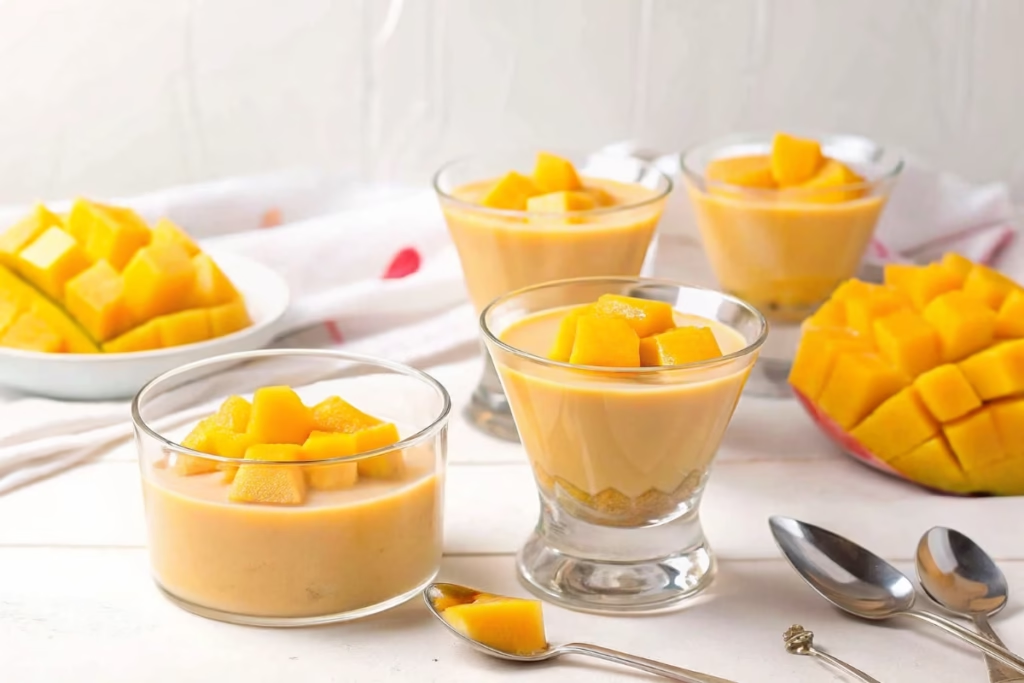
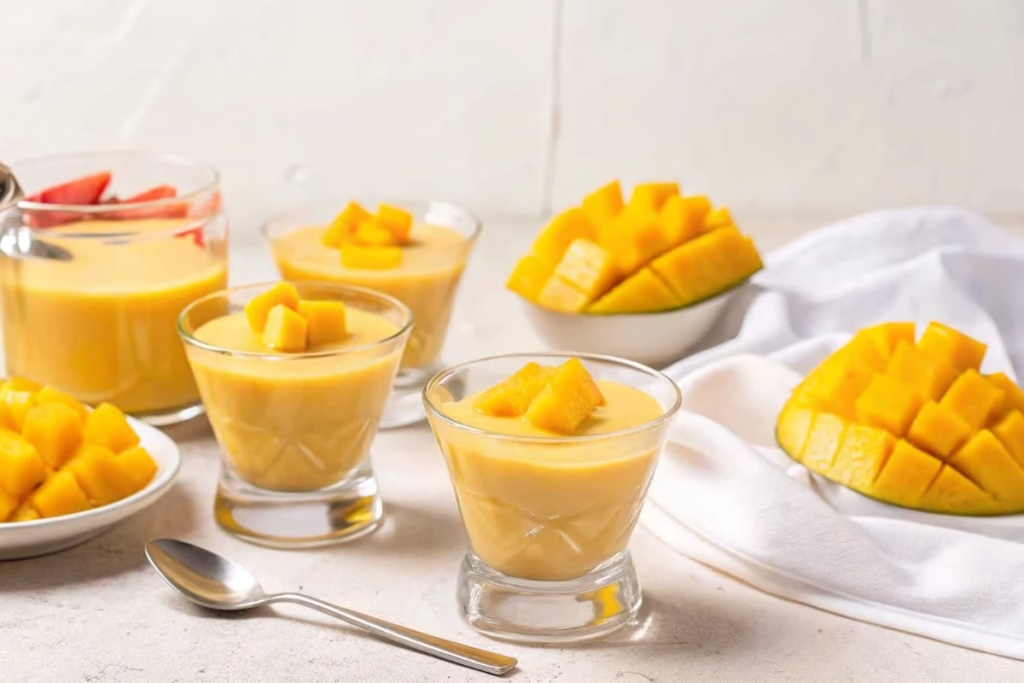
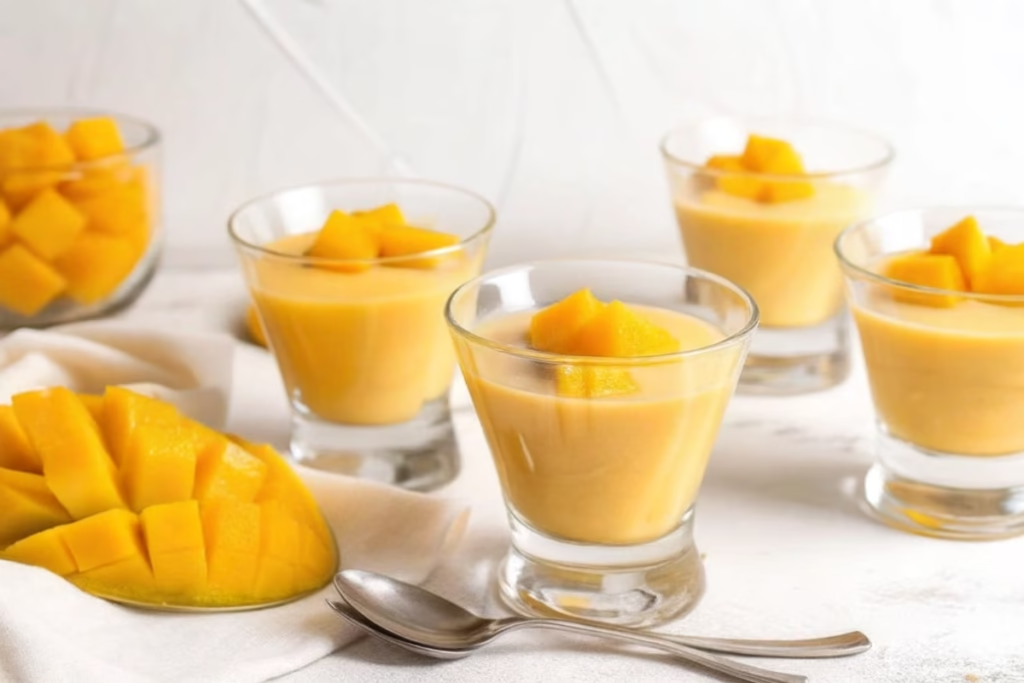
7. Mango Pudding (芒果布丁)
The crown jewel of Hong Kong desserts.
- Blend ripe mango, milk, and gelatin.
- Pour into cups and refrigerate until set.
- Garnish with mint leaves or mango cubes.
It carries the same tropical brightness found in the easy pineapple delight dessert.
8. Sesame Balls (Jian Dui)
Crispy on the outside, chewy inside — a festival favorite.
- Roll glutinous rice dough into balls.
- Fill with lotus seed paste.
- Coat with sesame seeds and fry or air-fry.
9. Ma Lai Go (Steamed Sponge Cake)
Light and bouncy, this dim sum classic uses brown sugar for a caramel flavor.
- Whisk eggs, brown sugar, and flour.
- Steam for a soft, honeyed result.
10. Sweet Potato Ginger Soup
Perfect for cold nights, this warm soup is simple yet nourishing.
- Simmer sweet potatoes and ginger slices.
- Add rock sugar and serve warm.
This wholesome dessert is as comforting as it is healthy.
🍰 Modern Chinese Dessert Creations
In modern kitchens, Chinese desserts evolve constantly. Bakers and pastry chefs experiment with flavors that bridge East and West:
- Matcha lava cake — chocolate meets green tea.
- Black sesame panna cotta — nutty meets creamy.
- Green tea cheesecake — no-bake, soft, and subtly sweet.
Fusion desserts work wonderfully when you borrow ideas from the easy dessert with crescent rolls. Imagine crescent-roll pastries stuffed with red bean paste or taro cream — a modern twist on dim sum.
For frozen delights, recipes like easy frozen peppermint dessert inspire matcha popsicles or lychee sorbet — cool, refreshing, and made in minutes.
🥭 The Tropical Influence
Southern China’s proximity to tropical regions brings fruit-forward desserts — coconut, mango, pineapple, and durian all appear in Cantonese sweets.
You can craft tropical versions of classic puddings by adding:
- Coconut cream for richness
- Chilled mango purée for brightness
- Diced pineapple or passion fruit for tang
These ideas echo tropical creations like the easy coconut mousse dessert, where light textures meet vibrant flavors.
🥥 Ingredients That Define Chinese Desserts
Here are essential ingredients for any dessert lover diving into Chinese sweets:
| Ingredient | Use | Flavor Profile |
|---|---|---|
| Glutinous rice flour | Mochi, rice cakes, Tang Yuan | Chewy, sticky |
| Red bean paste | Fillings for buns & pastries | Earthy, sweet |
| Lotus seed paste | Mooncakes, buns | Smooth, nutty |
| Rock sugar | Sweet soups, jellies | Mild, crystalline |
| Coconut milk | Puddings, drinks | Creamy, tropical |
| Osmanthus flowers | Jellies, teas | Floral, honey-like |
| Mung beans | Soups, cakes | Light, cooling |
Each ingredient reflects balance — soft yet strong, sweet yet subtle — mirroring the heart of Chinese cooking philosophy.
🍶 Step-by-Step Recipe: Black Sesame Soup
Let’s walk through one of the easiest Chinese dessert recipes for beginners.
Ingredients
- ½ cup black sesame seeds
- 3 tbsp rice flour
- 2 cups water
- 2 tbsp sugar or honey
Instructions
- Toast sesame seeds until fragrant.
- Blend with 1 cup of water until smooth.
- Whisk rice flour into the mixture.
- Simmer with remaining water and sugar until thick.
- Serve warm — its aroma is pure nostalgia.
🍵 Perfect Pairings & Presentation
Chinese desserts pair wonderfully with mild teas and simple garnishes.
- Pair Tang Yuan with ginger tea for warmth.
- Serve puddings in glass cups to highlight color.
- Garnish with osmanthus petals or mint leaves.
- Sprinkle crushed peanuts for extra texture.
Presentation matters — round shapes symbolize wholeness, while translucent desserts represent purity and clarity.
🍃 Healthier Ways to Enjoy Chinese Sweets
Even traditional versions are low in fat, but you can make them lighter:
- Use monk fruit sweetener instead of sugar.
- Steam instead of deep-fry.
- Swap coconut cream for almond milk.
Some guilt-free favorites include:
- Almond jelly — cooling and high in protein.
- Mung bean soup — detoxifying and gentle on digestion.
- Pumpkin Tang Yuan — festive and fiber-rich.
For more autumn ideas, see easy pumpkin desserts, where seasonal ingredients blend with traditional textures.
🌏 Regional Variety in Chinese Desserts
China’s vast landscape brings regional charm to its sweets:
Northern China
- Jujube cake — steamed with red dates.
- Sweet red bean buns — soft and hearty.
- Peanut candy — crisp and nutty.
Southern China
- Coconut jelly, mango pudding, and taro paste desserts.
- Sweet soups that cool the body during hot months.
Eastern China
- Tang Yuan and glutinous rice cakes.
- Sesame rolls and lotus paste buns.
Western China
- Uyghur nut desserts and honey pastries influenced by the Silk Road.
Each region showcases its unique balance of local ingredients and climate influences — together forming a dessert culture as diverse as China itself.
💬 Frequently Asked Questions
Q1. What is the easiest Chinese dessert to make?
Mango pudding and almond jelly — minimal cooking, maximum flavor.
Q2. Are Chinese desserts always sweet?
Not overly. They emphasize subtlety — sweetness that refreshes, not overwhelms.
Q3. What’s a typical New Year dessert?
Nian Gao (sticky rice cake) symbolizes prosperity.
Q4. Do I need special tools?
No — a steamer, saucepan, and mixing bowl are all you need.
Q5. Can I combine Chinese and Western desserts?
Absolutely! Try a matcha crème brûlée or black sesame tiramisu.
Q6. Are Chinese desserts healthy?
Most are naturally low in fat and use wholesome ingredients like beans, rice, and fruit.
Q7. What teas go well with Chinese desserts?
Oolong, jasmine, and pu-erh teas balance sweetness and aid digestion.
💡 Expert Tips for Perfect Results
- Use fresh ingredients — flavor is delicate, so freshness matters.
- Keep sweetness moderate.
- Understand the difference between rice flour and glutinous rice flour.
- Steam gently to prevent dense textures.
- Chill puddings completely for smooth consistency.
- Use ginger or osmanthus to add depth without extra sugar.
These small touches transform a simple recipe into something unforgettable.
🏮 Cultural Significance of Chinese Desserts
Desserts carry meaning — they’re part of storytelling.
- Round Tang Yuan signifies unity and family bonds.
- Golden egg tarts represent wealth and joy.
- Osmanthus jelly symbolizes love and purity.
During festivals like the Mid-Autumn Festival or Lantern Festival, desserts become blessings shared among loved ones. Each bite connects generations through time-honored tradition.
🎉 Conclusion
Exploring easy Chinese desserts is more than just cooking — it’s about understanding centuries of cultural wisdom condensed into sweet simplicity. From mango pudding to black sesame soup, these dishes are comforting yet elegant, easy yet profound.
Like the easy pineapple delight dessert or easy coconut mousse dessert, Chinese sweets remind us that sophistication doesn’t require complexity. All it takes is a few humble ingredients, a gentle hand, and a respect for balance.
So the next time you crave something delicate, warm a bowl of Tang Yuan, chill a mango pudding, or prepare a sweet sesame soup. You’ll taste not just dessert — but the spirit of Chinese tradition itself. 🍵
PrintEasy Chinese Mango Sago Dessert
- Total Time: 25 minutes
- Yield: 4 servings 1x
Description
An easy and refreshing Chinese mango sago dessert made with juicy mangoes, creamy coconut milk, and chewy tapioca pearls.
Ingredients
- 2 ripe mangoes, diced
- 1/2 cup small tapioca pearls (sago)
- 1 cup coconut milk
- 1/2 cup whole milk
- 3 tablespoons sugar
- Ice cubes for serving
Instructions
- Bring a pot of water to a boil and cook tapioca pearls until translucent.
- Drain and rinse tapioca pearls under cold water.
- In a bowl, combine coconut milk, whole milk, and sugar.
- Stir until sugar is fully dissolved.
- Add cooked tapioca pearls and diced mangoes.
- Mix gently until well combined.
- Chill in the refrigerator for 1 hour.
- Serve cold with ice cubes if desired.
Notes
Use ripe and sweet mangoes for best flavor. Adjust sugar to taste.
- Prep Time: 10 minutes
- Cook Time: 15 minutes
- Category: Dessert
- Method: Boiling
- Cuisine: Chinese
Nutrition
- Serving Size: 1 serving
- Calories: 280
- Sugar: 22g
- Sodium: 45mg
- Fat: 9g
- Saturated Fat: 7g
- Unsaturated Fat: 2g
- Trans Fat: 0g
- Carbohydrates: 48g
- Fiber: 2g
- Protein: 3g
- Cholesterol: 0mg
Keywords: easy chinese dessert, mango sago, chinese sweets, no bake dessert


